
To Cohere the Many: On the Cohort Program and its Future
Every organization needs structures that turn isolated victories into collective power. Looking back on the first year of YDSA’s cohort program, the Strategic Campaign Committee examines the program’s successes, shortcomings, and future, inviting convention delegates to consider how Y/DSA can better connect chapters and strengthen coordinated organizing.
“National unity around a campaign can not be imposed from above. It has to be an emergent quality that bubbles up through a connective tissue, organically built out of a trust and confidence in our ability to carry out nationally coordinated actions. The role of national in this can not be to dictate these relationships, but to create the mediums for them to flourish – to give a unified form to the politics already emerging from autonomous chapter activity.” – Will S¹
The Young Democratic Socialists of America, collectively made up of more than 150 chapters and OCs, is fractured. All across the country, our chapters run campaigns against ICE, to build unions, to divest from Israel, and more. These campaigns are waged against educational institutions, both public and private, that contribute to the maintenance of the capitalist mode of production currently preserved and architected by the American empire. This empire, a goliath compared to the adolescent David that is the Y/DSA, necessitates the cohesion of our organization to fell the enemy. To see our chapters collectively pull back the sling, win demands, and eventually destroy this capitalist state, the Strategic Campaign Committee has, for the past term, not only developed trainings and materials to aid chapters in their campaigns, but has embarked upon a program through which we aim to cultivate inter-chapter interaction, experience sharing, training, and solidarity.
Through the process of debriefing this program, the cohort program, at the end of the spring semester, and through the exchange of thoughts and perspectives within the committee, we, the SCC, believe that an important discussion to be had about the cohort program and the course of its future lies in the question of how the cohorts are structured. When we refer to the structure of cohorts, we are discussing the basis upon which cohorts are formulated and grouped, and within the view of the SCC, there are two prominent paradigms: Regional/Turf based cohorts and National cohorts. Below, we will first provide the history of the cohort program, from its proposal on the NCC to its full implementation. Following this context, we will provide points and rationale in favor of or against exposing this discussion to the broader organization and particularly to Convention Delegates. Please note that while the SCC, collectively, and especially its individual members, has its own opinions and biases on the direction of cohorts, this article is our attempt to present both sides of this argument as neutrally as possible, as we would like nothing more than to stimulate discussion for convention through this article. The SCC respects arguments for both paradigms, and will carry out the cohort program no matter what direction is taken in the coming term.
Implementation of the Cohort Program
“Cohorts have been valuable, but I want to emphasize that they are only so valuable. Since it’s so experimental, there is still a lot of improvement to bring into the cohorts […] Cohorts have worked because we put in the work to make it work.” – Jacob F²
Cohorts were originally proposed by NCC At-Large member Claire I J, and argued for by Will S in his article published in The Activist at the beginning of the Fall ‘25 term. The proposal sought to create groupings of chapters based on similar campaign types, vitals score, and organizing conditions to build cohesion between chapter campaigns by using cohorts as a forum to build and escalate disparate campaigns together. Once the aforementioned proposal was passed, these groupings were to be formulated in collaboration between the NCC and SCC, which first occurred on October 1st, 2025, from which 10 cohorts of 4 chapters each (40 chapters total) were produced based upon the above criteria. With these cohorts formulated, it was left to the SCC and its membership to conduct outreach and prepare cohorts for their first meetings. The beginning of this outreach occurred through the SCC launch call on October 17th, 2025, and was followed up over the coming months with phonebanking by the SCC that utilized signups from a cohort interest form first distributed at the launch call.
With outreach underway, the SCC began in earnest on formulating the agendas for the first round of cohort calls that would serve to introduce the cohort and its member chapters to each other. This formulation took place over a month, from November to December 2025, as the task was reassigned to committee members until it was completed. Yet, upon reviewing the completed agenda, the NCC also voted for cohort calls to be postponed to early-mid January. This was seemingly out of concern for interference by the coming winter break, and to allow for more time to do outreach. By January, there was growing urgency to begin cohort calls, both to take advantage of the limited time remaining in the spring semester, and because a grant partner had expressed interest in YDSA’s sanctuary campus priority campaign and cohort program. Thus, maintaining strong participation in cohorts through the end of the academic year could result in a grant award to YDSA.
With this urgency to bring about cohort calls, along with the results of the outreach the SCC had done in the prior semester, the 10 planned cohorts of 4 chapters were rearranged into 3 nationally-diverse cohorts containing 6 chapters each. Alongside these cohorts, there were also attempts at a University of California cohort, led by SCC member Gilson R, and a Florida YDSA cohort that would formulate over the spring semester, facilitated by the NCC point for Florida, Sofia B, and national Staffer, Evan C. Under this revised structure, the first cohort call was set for January 15th, 2026, with a cohort consisting of FIU YDSA, Towson YDSA, Colorado State University YDSA, WOU YDSA, University of Wisconsin Milwaukee YDSA, and UofL YDSA. This cohort was based on the chapters’ similar sanctuary campus campaigns and was designed to not include more than 1 chapter from any given region of the country. The call was facilitated by SCC member Jacob F, and cohort attendance included members from Towson, FIU, and CSU, displaying an issue that would stretch across the program’s rollout: the difficulty of getting all chapters present in a singular call, with fresh faces appearing throughout.
While cohorts did stimulate campaign experience sharing (exchange of events, efforts, and lessons learned from a chapter’s campaign), communal mentorship, and continued interest (a 4th cohort would be added partway through spring and all national cohorts expanded to 7-8 chapters), it seems that this did not universally penetrate beyond the involved leadership as we had desired. This could be due to a multitude of factors, such as: the SCC’s management of the cohorts — which was not only slow to start, but included a national Week of Action characterized by lackluster participation, for which there was zero non-SCC attendance for the debrief call. There was also insufficient participation from the NCC in these cohorts, where collaboration with facilitators could have benefited both NCC mentorship and SCC facilitation. By failing to share updates/action items produced by chapter check-ins/cohort calls, both parties missed a crucial opportunity to further build local leadership and campaigns. But more than anything, the program was experimental. It wasn’t just the task of a fresh committee, but also a task YDSA had not previously taken up to such a degree of depth and consistency. Now that the SCC is experienced as a committee and with cohorts, we, as a committee, believe it is appropriate to share the history of the program, its errors, and benefits, as well as assert that experience in this article, and in the upcoming 2026 YDSA Convention.
For Regional/Turf Based Cohorts
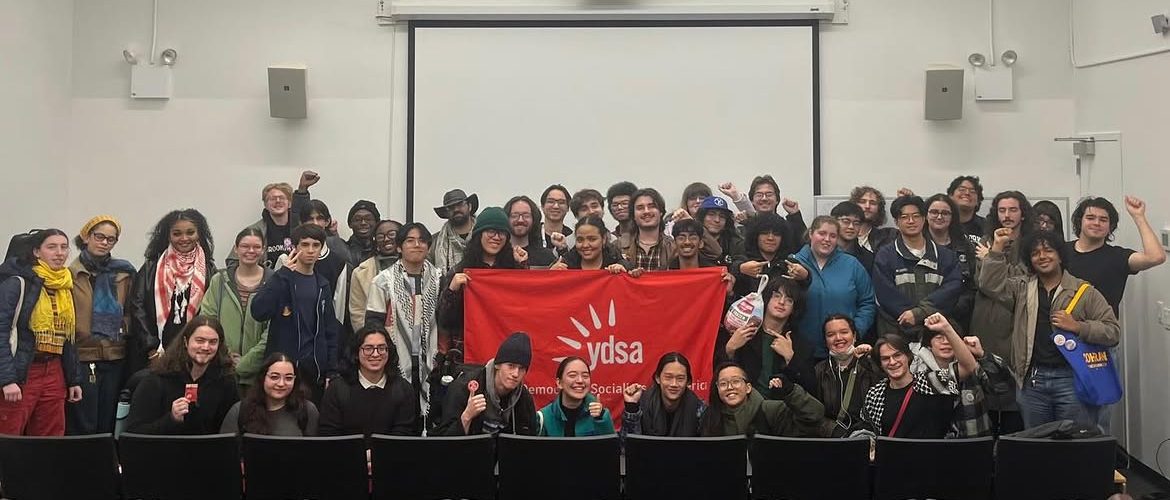
Photo of NYC-YDSA’s 2025 Citywide Convention courtesy of @NYC-YDSA on Instagram (Nov 25, 2025)
“Cohorts were organized in a way that wasn’t in line with how the NCC distributes turf, so for the NCC members not plugged in, it was an inorganic way to involve chapters, some ideas discussed was cohorts being more regional, deemphasizing groupings by vitals, need to figure out how cohorts can be supplementary to NCC mentorship and not parallel.” – Daniel S-C³
As our chapters grow and our campaigns scale up, it is quite common, if not a natural tendency, for our chapters to build connections with and gravitate towards their most proximate fellow chapters. This can be plainly seen in regional formations like NYC-YDSA and Milwaukee YDSA, which unite the chapters within their respective cities into a common structure for wider organizing and deeper coordination. However, many chapters do not have the advantage of geographic proximity that the aforementioned regional formations benefited from; conversely, many chapters are dispersed across their regions or states, with some residing in areas without even a DSA chapter for aid.
In the face of these challenges, organizing cohorts along regions could serve to bring these chapters into a common forum for collaboration. What may start as inconsistent exchanges via messaging platforms could be formalized and systematized to develop consistency of interaction, national involvement in regional activities, and extend this cross-chapter interaction beyond leadership. By effectively doing all of this, participants in cohorts could more easily understand the similarities of their struggles in addition to the similarities of their locales, which could breed ambitions for regional coordination on top of cohesion. This could prove especially true if cohorts are organized along university systems by taking advantage of common understandings of a shared target, which may more fruitfully inspire inter-chapter coordination, bolstering contesting our schools, and the systems and states which bind them.
Furthermore, if these regional cohorts are to be organized along regions as they align with NCC turfs, it would allow for better buy-in amongst the NCC into cohorts, as the NCC could keep better track of the cohorts and their meetings. This would make collaboration with the cohort facilitators easier, allowing for a common mentorship between NCC check-ins and cohort calls. ***Note that the resolution “R29. Uniting Labor and the Left to Defeat Fascism” and amendment 1 to resolution “R09. For a Strategic Sanctuary Campaign on All Fronts” as proposed for the upcoming convention call explicitly for cohorts formed along NCC turf and University Systems
Altogether, the SCC sees the motivation for regional cohorts organized along regional, turf, or university system lines to be that such a structure could garner a lot more immediate buy-in and interest. If developed, this could spin off more immediately into inter-chapter coordination and NCC involvement.
For National Cohorts
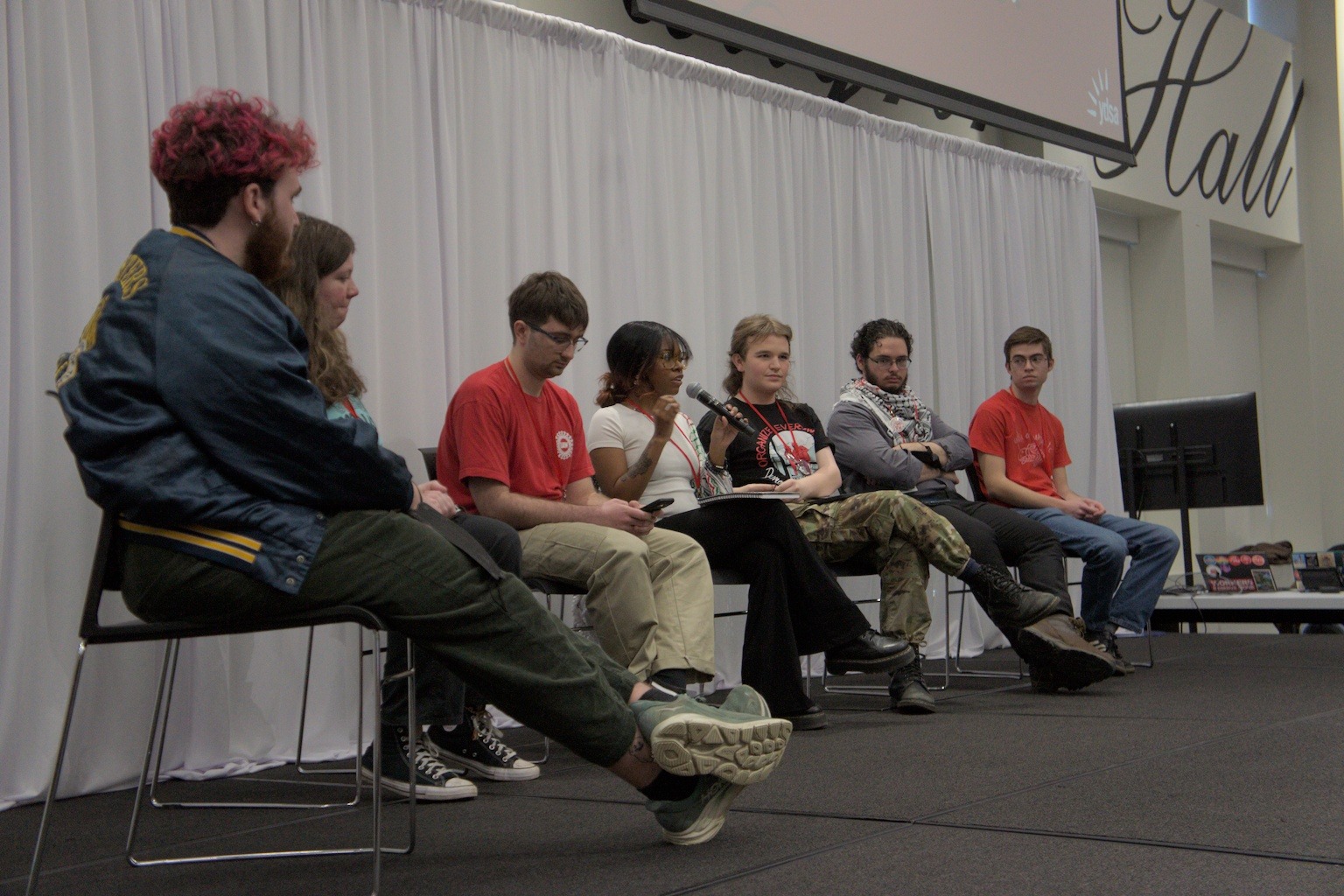
Photo from the Strategic Campaign Panel at the 2026 YDSA Organizing Conference via Diego M (Feb 21, 2026)
“Going beyond [localism] that offers a stage where chapters can learn and think together especially if they have different levels of experience.” -Will S⁴
It should be made clear that this is the structure for which cohorts were first proposed, and through the SCC’s organization of cohorts, organized in the past year. These forums were made deliberately non-local. The strength of this structure in cohorts is in how it can challenge our tendencies of localism, or at least offer a platform for more immediate national interaction parallel to local ambitions for common structure. In this way, cohorts could serve to bring our Organizing Conference to our mass membership, which does not have the opportunity to trek and lodge every year to be able to meet their comrades en masse. This means that the interactions we have, whether in a workshop training, panel discussion, or casual conversation, can be to some degree replicated virtually and year-round. In this, our chapters, and especially our rank and file, would have near constant access to comrades from around the country to exchange lessons and experiences, creating a common understanding of not just local struggles, but national struggles.
The fostering of this cross-national interaction consequently needs infrastructure and planning that is national in scope, which can only be provided by our national organization. With our natural inclinations for regional connection and common structure building taken into account, cohorts could serve to occupy a lane of intra-YDSA organizing the runs in conjunction with those regional ambitions. This could be especially useful when also considering the distance between our most prominent chapters, which national cohorts could serve to better connect via standards of common vitals, conditions, and campaigns when determining cohorts. But this also means that those newest and smallest chapters have the chance for deeper connection with their far-flung peers, providing experience sharing and training to chapters in one of, if not the most vital point in their lives, and exposing such chapters to others just like them, in struggles just like theirs through national connection.
Lastly, cohorts can foster this cross-national interaction which ordinarily has little reason to occur. This could better cohere our organization as one, united youth wing that could run truly national campaigns. The first step in this could be the initiation of cohorts in the beginning of fall; chapters could be brought together in a time where the present stages of their campaign are more approximate to one another. In other words, by being conducted during a period in which each chapter is still developing and starting down their campaign timelines, cohorts offer the ability for them to do so together, which would serve as a boon to each chapter’s campaign, leading to better cohesion and coordination campaigns. Alongside a national structure, this coordination of our campaigns necessitates a longer-term investment, with more efforts to develop participation and buy-in needed. But compared to regional cohorts, national cohorts could serve to eventually catch the golden goose of YDSA organizing by eventually facilitating prominent national priority campaigns that deliver big wins. ***Note that amendment 1 to “R25. Strategic Campaign Committee Re-Charter” proposed for the upcoming convention calls explicitly for nationally diverse cohorts
Where To Go from Here?
“The cohort program is really strong. We need to keep in mind that we did an experimental project and the results have been strong. A big achievement has been getting rank and file members of YDSA engaged in our work without having to commit to joining the committee before. I think that next year it will be more important to jump and start on cohorts at the beginning so that we can start helping chapters as they begin to plan their campaigns. I truly believe that with more planning and effort it can be so successful. Already our project inspired a lot of committees with work they are doing” – Maxon A⁵
As of July 2026, YDSA amounts to nearly 3500 affiliated members, which is nearly 1600 more members than the organization had following turnover from graduation at the end of the 24-25 term. YDSA grows through the strength of our local organizers, as seen through the rapid growth of UMD College Park YDSA, the work of our parent DSAs, as seen through the 4000+ members who have joined in the week since the 2026 NYC Democratic Primaries, and the broader national events, as seen through the bump felt following the 2024 General election. With this growth comes a layer of incoming members for which it is our mission to engage with and develop into activists, organizers, and fellow socialists. In this mission, undeniable success would mean that their time in YDSA is not just a college org in their lives, but the beginning of a long struggle for emancipation shared with our entire organization.
To develop such commitments, we, the SCC, believe the cohort program, its expansion, and its sophistication are paramount in achieving the goals of activating those 1000s of us not engaged beyond local chapters, of developing campaigns that can cohere and coordinate beyond the scope of individual chapters, and of transforming YDSA into an organization that can meaningfully contest power wherever our chapters are present. We believe the structures and their rationales provided above offer different roads and consequent outcomes to those goals, and we look forward to developing whatever form of cohorts emerges from the 2026 convention.
Solidarity Forever,
The 2025-2026 Strategic Campaign Committee