
The Road to May Day 2028: An Interview With the Youth Labor Committee
In conversation with the Youth Labor Committee, The Activist talks strategy: salting, industrializing, strategic industries and Y/DSA’s place in organizing workers now to prepare for a general strike in 2028.
This article first appeared in the Winter 2026 Print Issue, which can be found here.
Former University of Oregon YDSA political education chair and current UO Student Workers-United Auto Workers Local 8121 president Jacob Gattone disrupts a talk on “democracy’s future” with Larry Diamond and Francis Fukuyama on May Day 2025, marking day four of UOSW’s historic strike. Student workers shut the event down, chanting: “Show me what democracy looks like! This is what democracy looks like!” via Robin Bailey
With 2025 in the past, we’re moving closer to one of DSA’s most exciting upcoming actions — May Day 2028 — a nationwide general strike planned to take place on International Workers’ Day, May 1, 2028. In a recent interview, the co-chairs of YDSA’s Youth Labor Committee (YLC) spoke to The Activist about what makes May Day so vital to YDSA as a whole.
“I see (May Day) as thinking beyond what striking can do for just one workplace, or even one industry. It’s about being a huge collective action that will really strike fear into capital, and really have the potential to win bigger demands than just on a single work site,” said Gerica N.
May Day is an opportunity for us as YDSA members to stand in solidarity with workers all across the United States against the billionaire class. As we look towards May Day, what can YDSA members do over the next two years to prepare for the strike?
Gerica told The Activist that “the most important thing is having YDSAers be a part of the labor movement itself. Whether you’re currently a student worker or you’re just graduating and going into off-campus labor, you need to be active in a union and pushing to be strike ready. Generally, we also just need more union density in this country, so if your future workplace isn’t a unionized one, you need to be prepared to salt it.”
Salting is a union tactic where a trained organizer is sent to a non-unionized workplace with the goal of unionizing it. A crucial factor in May Day’s success will be in our ability to work together not just in YDSA, but also in collaboration with unions and workers across the country. Union density in the United States is at a historic low, but that’s where YDSA members can help. Whether it’s through salting, joining an already existing union or just spreading the news to other students and workers, YDSA members should be doing anything they can to get people on board with May Day efforts.
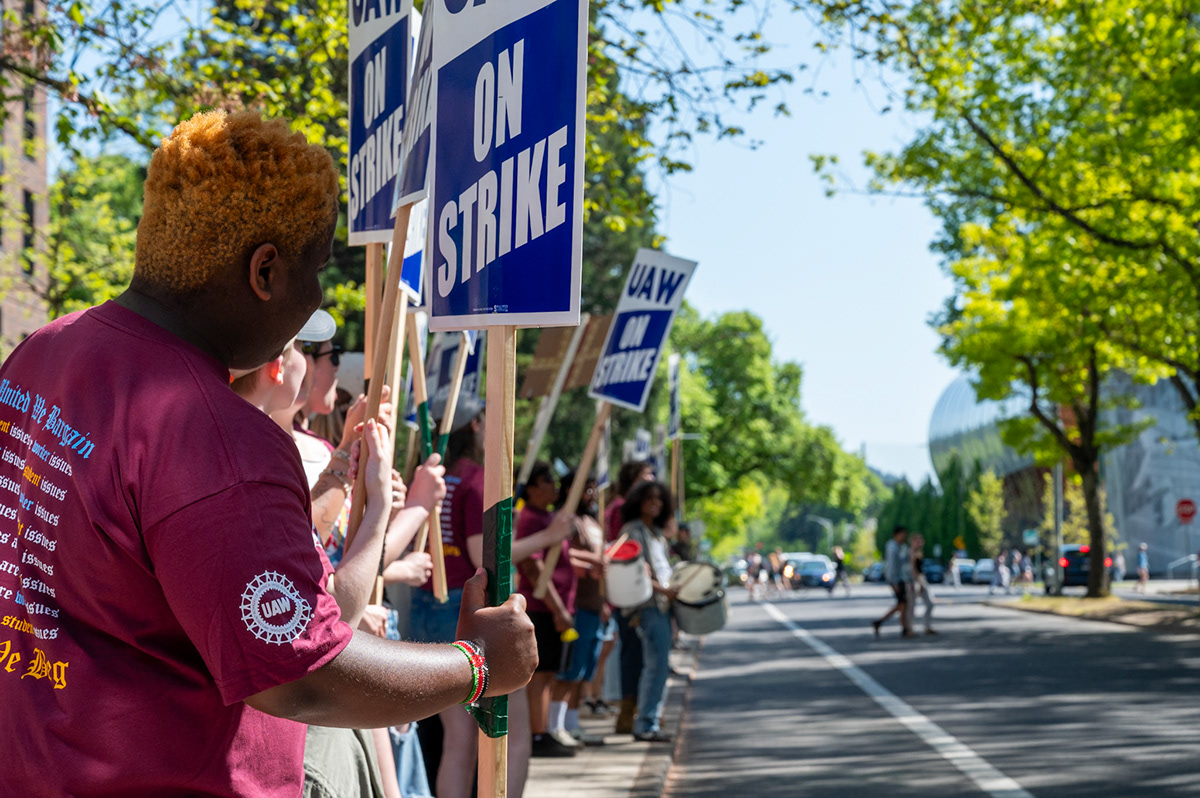
“I think a lot of the time we overcomplicate it… how do you join the labor movement? How do you learn how to organize? You just got to do it.”
—Roxy, Youth Labor Committee co-chair
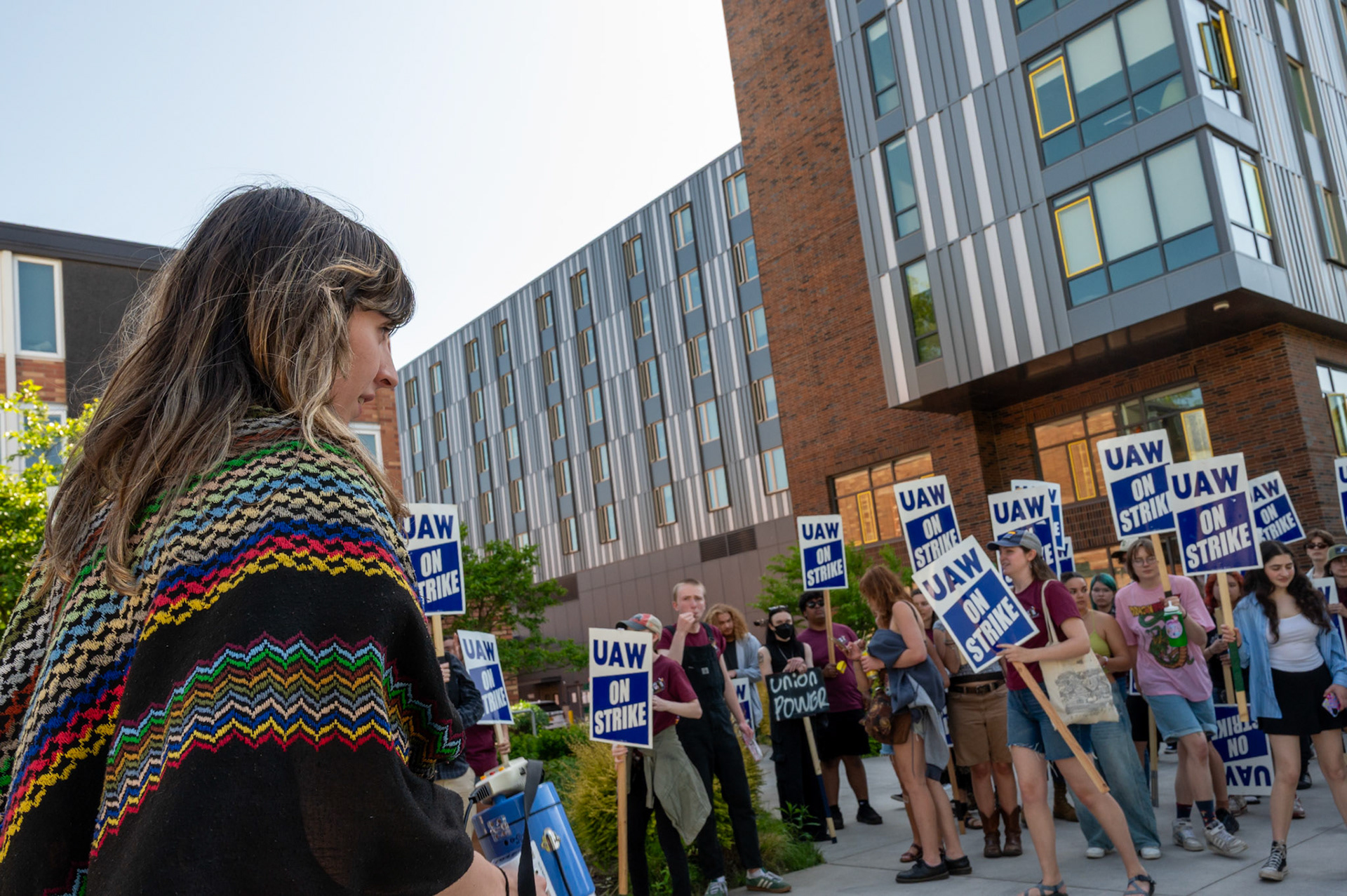
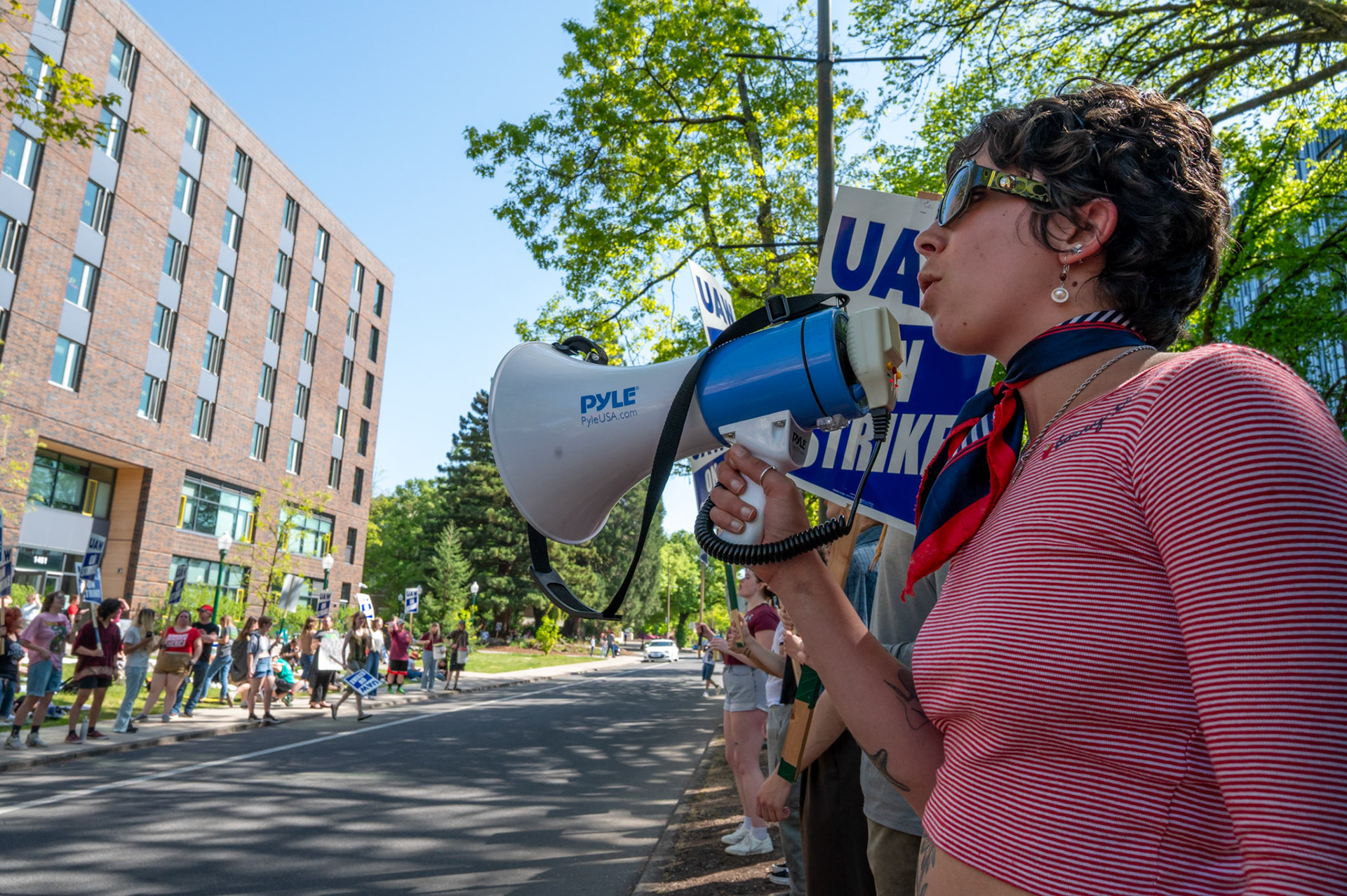
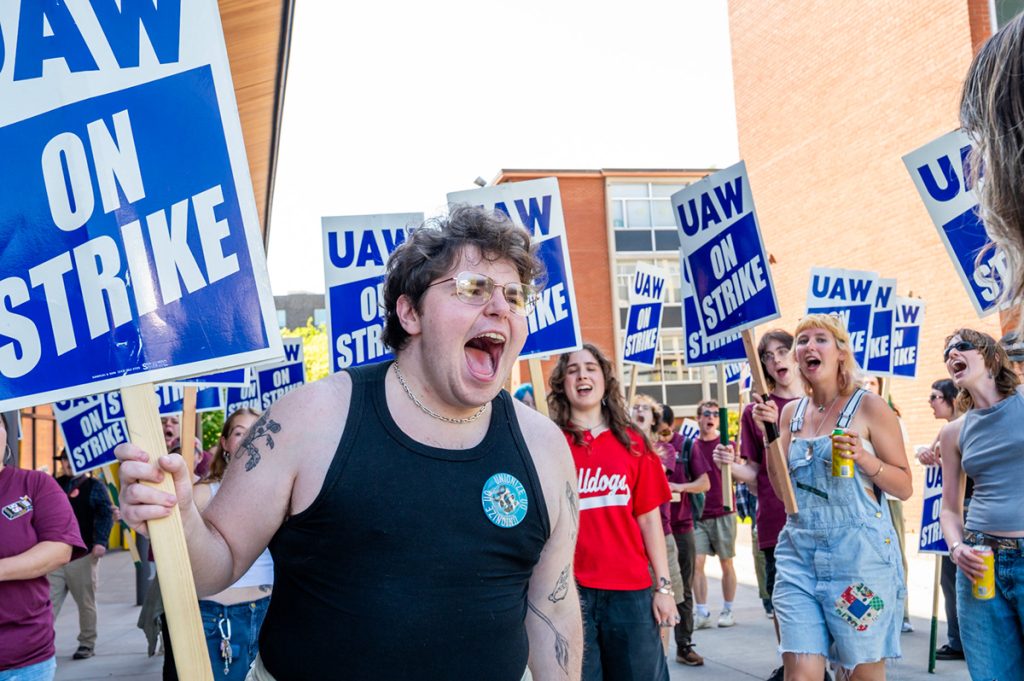
Left: Former UO YDSA chair and current YLC member Mae Bracelin takes a breath after leading striking workers in a march through a core dining hall location on May Day. Right: UO YDSA’s current Socialists of Color Committee chair Ella Hayden led chants on the line on May Day 2025. via Robin Bailey
Roxy, another co-chair of the YLC, emphasized the unique importance of students who are just starting university in regard to unionization and salt, saying, “Specifically for us in YDSA, because we’re college students primarily, get a job and organize student workers. Like this is kind of the perfect time to do that.”
For students who are interested in this, there are plenty of resources for this kind of work through YDSA. Gerica adds, “We have salting trainings on the YLC, and it’s important that you get connected with DSA’s WOW (Workers Organizing Workers) or EWOC (Emergency Workplace Organizing Committee).”
While it can be daunting to participate in these salt programs and unionization efforts as a student just starting out, Roxy explains that tasks are often less complex than they appear: “I think a lot of the time we overcomplicate it a little bit in terms of how do you join the labor movement? How do you learn how to organize? You just got to do it.”
In addition to prioritizing the volume of workers for this strike, we must work to ensure a variety of different labor sectors participate. Gerica spoke on the strategic importance of students who are graduating soon or entering into their specific career fields: “You should be thinking about where you can make the most difference — where you can be a really big hit to capitalist pockets. That might be healthcare, logistics or education.”
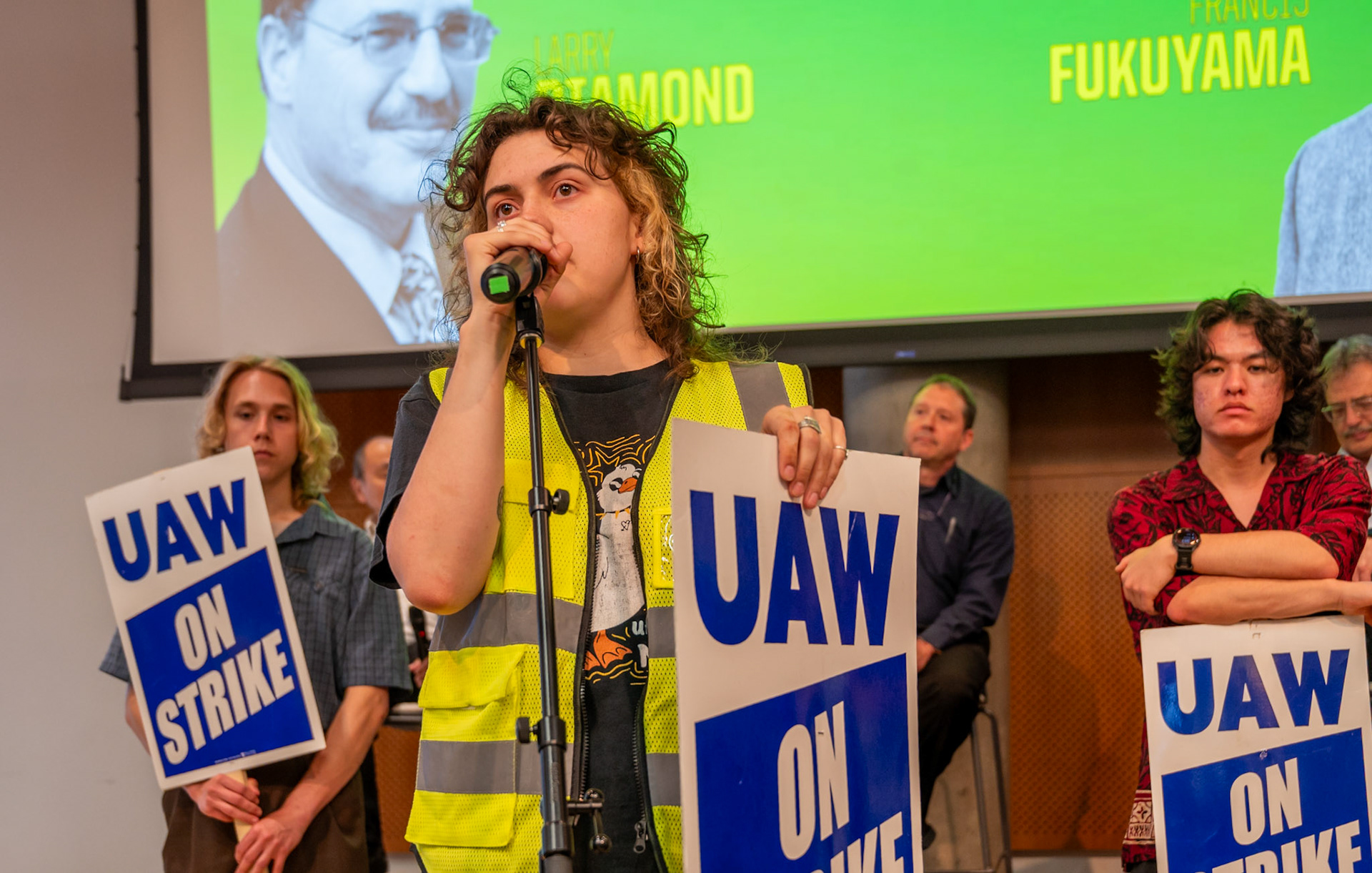
UO YDSA’s current labor committee chair and YLC member Sophia Jones gives a speech on May Day 2025. via Robin Bailey
Beyond individual students, Y/DSA chapters should also look towards May Day and begin to prepare their members. Gerica provided insights on this: “It’s really important to prepare our DSA chapters and YDSA chapters to be ready to provide strike support. Developing relationships with your local unions right now, especially on your campus, is going to be really important. Get connected with your DSA chapter. Get prepared to raise strike funds and put together strike kitchens and things like that.”
“We (YDSA) have been able to really… dig into young people in the labor movement and train (them how to organize). And DSA just doesn’t really do that in the same way.”
—Roxy, Youth Labor Committee co-chair
Expanding our horizons beyond our own schools to our local chapters and the nationwide org as a whole is vital to ensuring success come May Day. Roxy provides some more guidance for YDSA chapters who want to start this process: “Do political education and strike support and reach out to unions. Build a labor committee in your YDSA chapter, do fun stuff and then organize your workplace. I think in addition to strike support, DSA and socialists are at our best when we are learning how to organize the working class.”
Gerica also notes, “In addition to strike support and helping out, make sure that you have a list of like unions that are going on strike in 2028 or 2026 and things like that, which is very important. I would really love to see DSA start to transition more into, like, how do we train people, socialists, how to organize their workplace? And how do we do it as socialists specifically?”
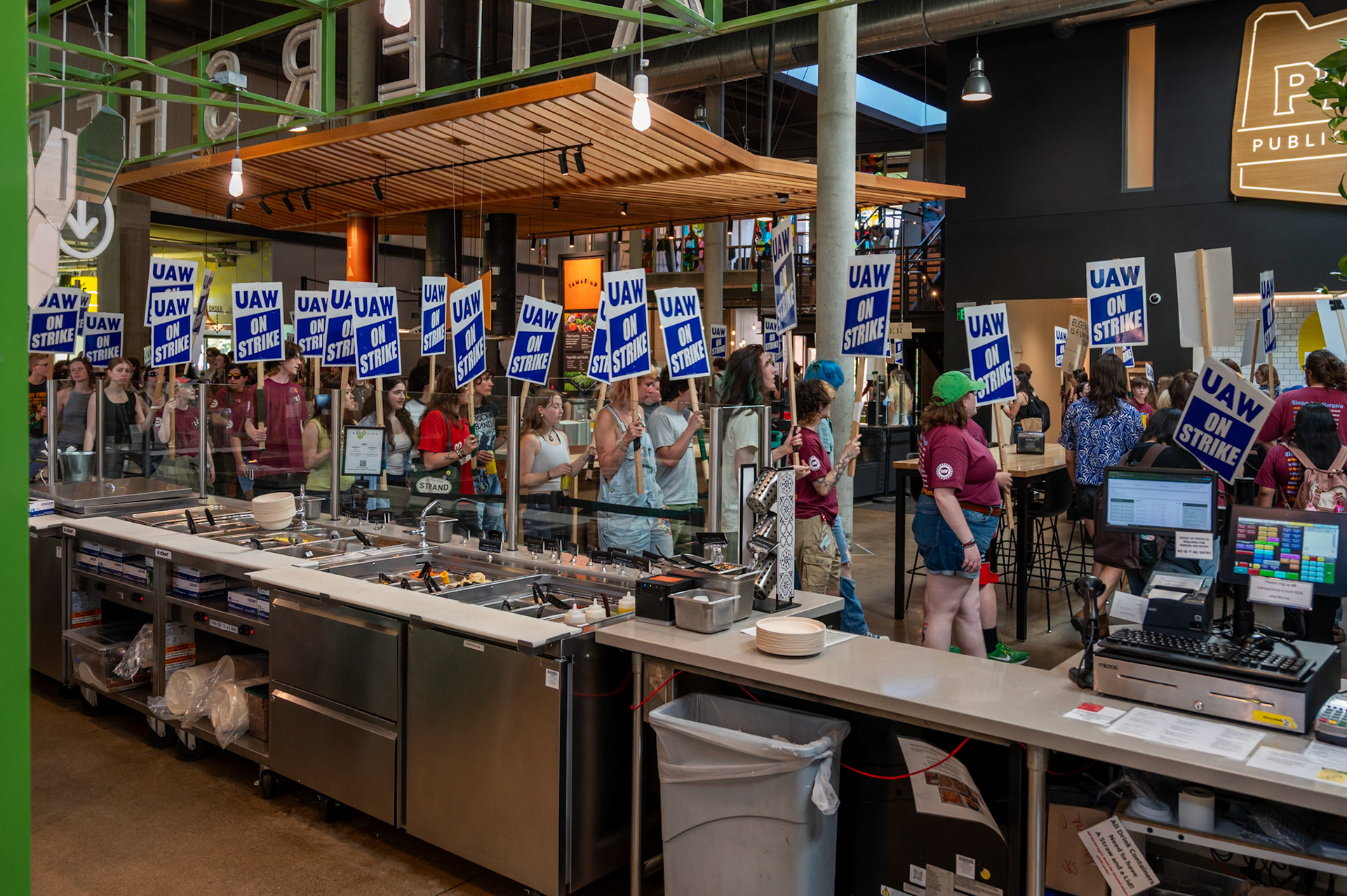

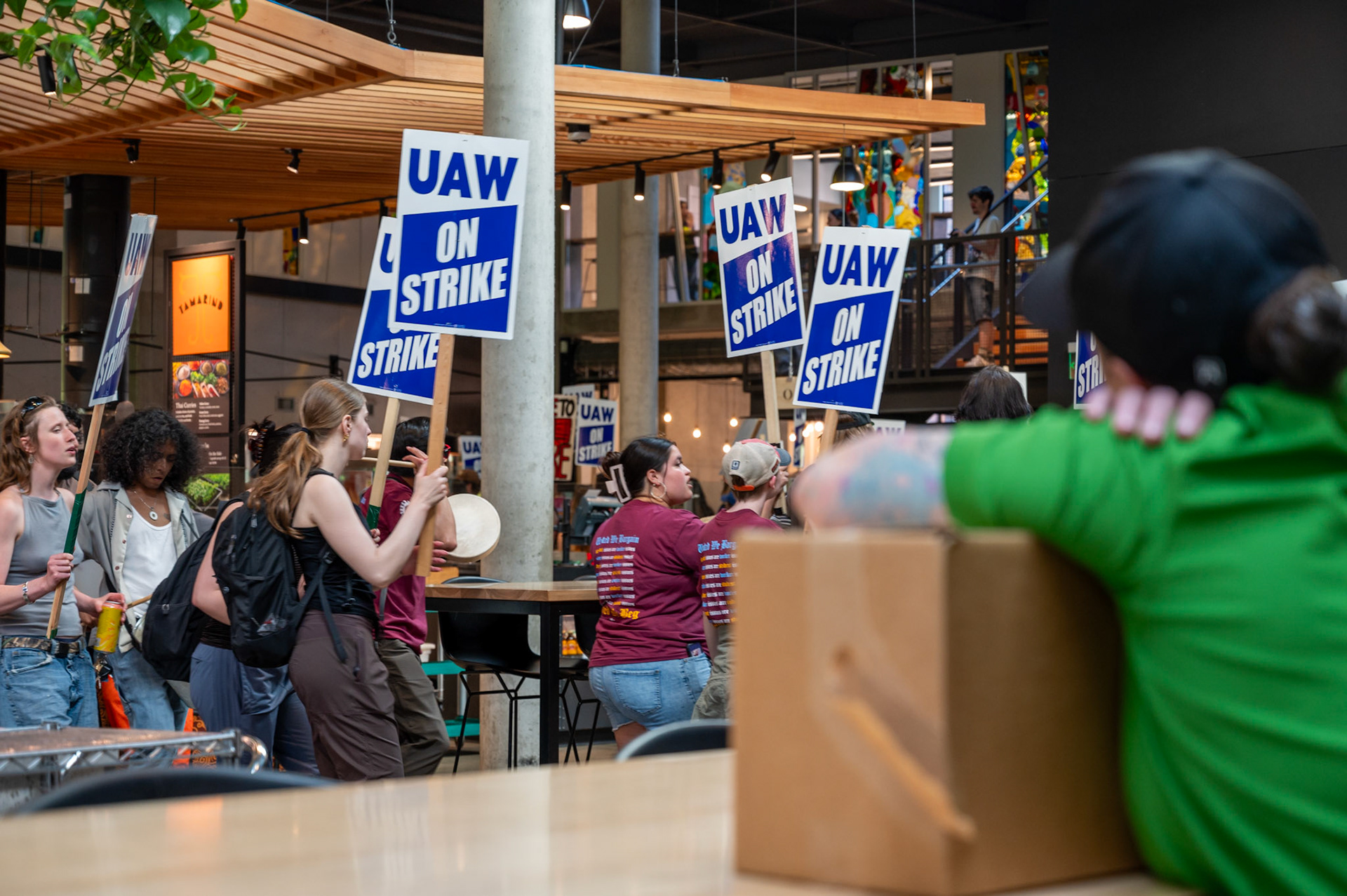
UOSW marches through a central dining location on May Day 2025. via Robin Bailey
As Roxy and Gerica say, YDSA and DSA have the unique ability to help educate people on unions and the importance of organizing in labor, and we have to capitalize on this position if we want people to show up for May Day.
This work has been pioneered by the YLC, and for YDSA members who want to get more involved and want to help integrate these ideas into their own chapter, attending YLC training is a great place to start. Roxy commented on the YLC’s importance to YDSA/DSA, “We have been able to really kind of dig into young people in the labor movement and train up a lot of people on how to organize. And DSA just doesn’t really do that in the same way.”
There’s a lot of work to be done over the next two years to prepare for May Day and there’s no better time to begin than now. YDSA and DSA have a critical role to play in shaping the future of the labor movement.
Through training organizers, growing union density and embedding itself within the broader working class movement, YDSA can help ensure that May Day 2028 has the potential to hit the ruling class where it hurts.
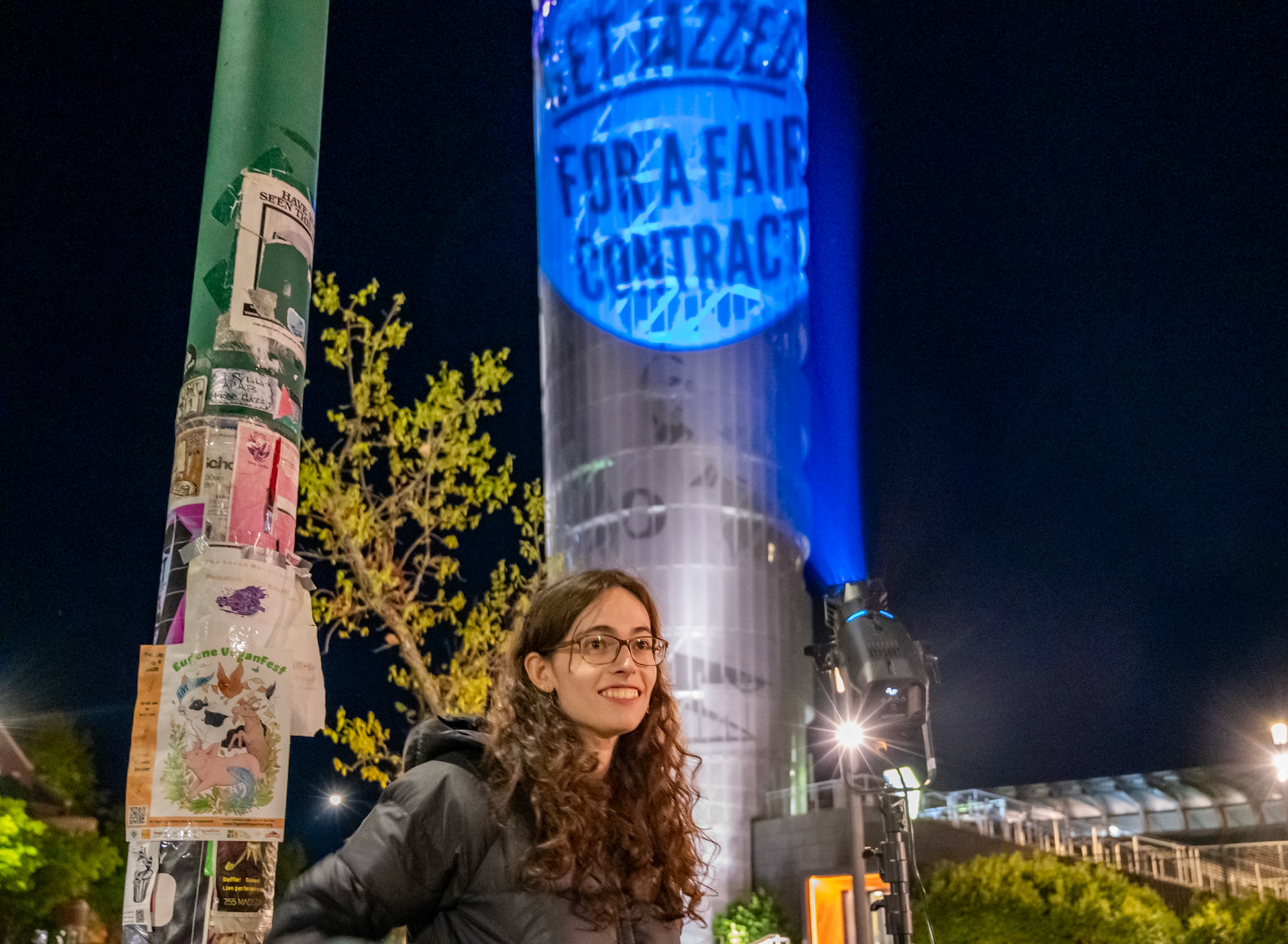
UO YDSA’s current Socialist Feminist Committee chair Madeleine Ford made use of a bat light — projecting a message on Hayward Field’s tower — loaned to striking student workers by union allies on the night before May Day 2025. via Robin Bailey