Handing Zohran The Mandate Of Heaven: How Can NYC-YDSA Support Mayor Mamdani Post-Election?
This article examines why outer-borough communities (home to many working-class New Yorkers who stand to gain the most) remain politically disengaged, and how NYC-YDSA can mobilize these neighborhoods to secure and sustain a true mandate for Mayor Zohran Mamdani.
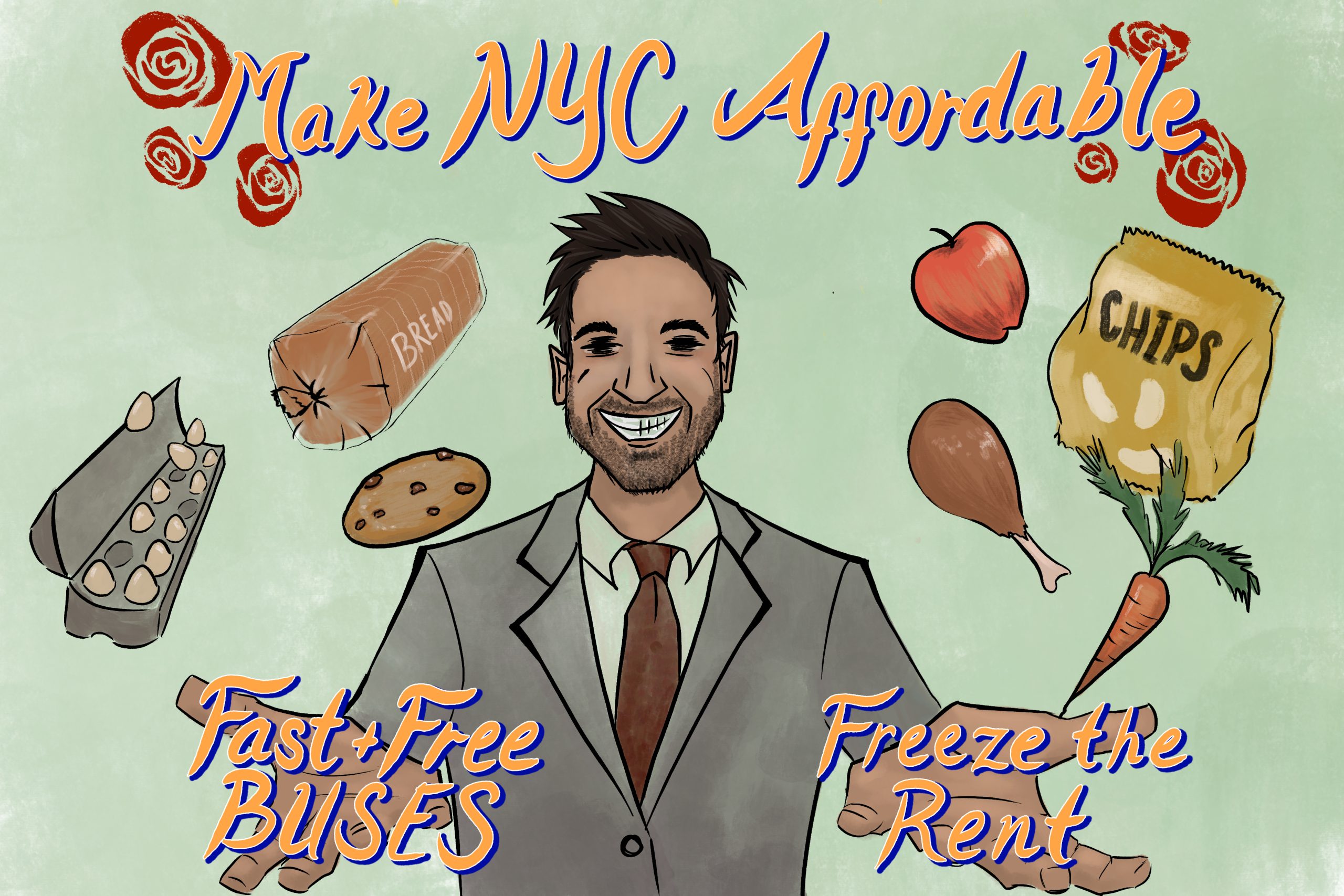
Illustration by Jada Nakagawa
There are many on the left who rail against the concept of New York Nativism. Leftists argue that the attribution of nativity to anyone in NYC distracts from the great story of New York as a city of immigrants, and this designation on a political level leads to an unwillingness to change. New York Nativism can generate a general apathy or conservatism among a great swath of the city that lives in the outer boroughs- in the single-family homes of South Jamaica or Classon Point, in the projects of Samuel J. Tilden Houses or Bland Houses, or the planned communities of Parkchester and Rochdale Village.
There is a general political sentiment, specifically among professionals who have moved here in the past ten years, that the “outer boroughs” are obstacles to the progress of our socialist electoral project, as the outer boroughs tend to host a sub-sect of “Native New Yorkers” far from the hustle and bustle of Manhattan.
Even with Zohran’s electoral breakthrough on June 24th, the Election Day map shows that the neighborhoods split between Cuomo and Zohran were largely in the outer boroughs. These include the long-established Black and Caribbean communities of Southeast Queens, where residents are feeling the brunt of rising living costs; predominantly Latino and Black areas of the South Bronx marked by severe food deserts; and parts of East Flatbush and Canarsie, home to Haitian and Guyanese working-class voters who backed Cuomo over Mamdani mainly because they recognized his name. To be frank, the fact that these areas even have a chance of voting for a socialist is a major accomplishment and speaks to his success, but the fact that folks who stand to benefit the most from democratic socialism have a lower willingness to vote for it is a massive issue.
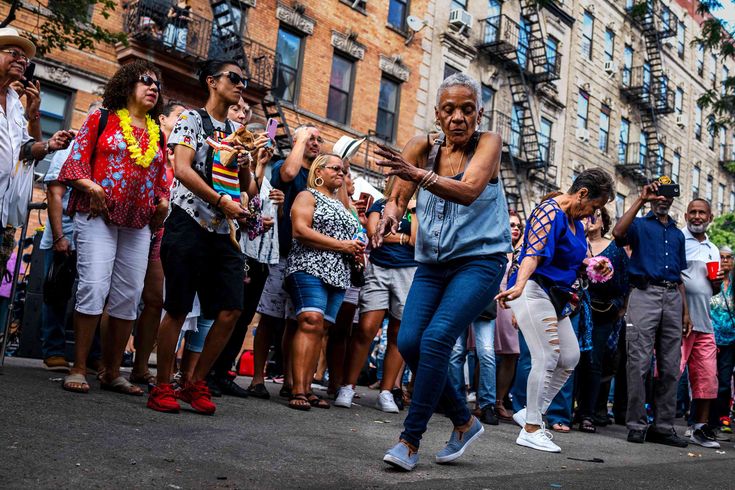
Residents dance to live music during the Annual South Side United Block Party in Brooklyn, where friends from the ’70s, ’80s, and ’90s come together to celebrate peace, unity, and community life. Photo by Demetrius Freeman, from the artist’s portfolio.
Many of the folks I’m talking about are conservative, but they’re also apathetic and busy. These areas are purple because, despite the efforts of the Zohran campaign and affinity groups like We Grew Here (a group separate from the Zohran campaign made to reach out to older voters born and raised in New York), these areas are disorganized. For most, political discourse is limited to brief conversations during a family dinner or in the midst of a smoke break with coworkers. Most people don’t have tons of time or energy to dedicate to politics or develop a comprehensive understanding of policy. As I write this, I’m picturing people like my dad.
This is where NYC-YDSA holds the potential to fill the gap. In the past few years, I have noticed a greater number of new members in NYC-YDSA who are from NYC. They are from these apathetic areas, and they join NYC-YDSA out of an effort to transform their lifelong home. They come from the single-family homes in East New York or Southeast Queens, and NYCHA housing in the Bronx. They are from the row of long-term NYC residents that line the edges of the boroughs.
It is the relational organizing of NYC-YDSAers that helped, in part, to deliver the staggering majorities for Zohran in the primary and helped his margin in the general election. But, to actually deliver a Mamdani Mandate and create support for him throughout his term, we need to develop our outreach in the outer boroughs by building up branches of NYC-YDSA. We need to find ways to promote and support Zohran’s policies citywide through initiatives led by members of these communities, and, most importantly, by strengthening our public colleges. As much as I’d like to say NYU and Columbia are the vanguard institutions of the working class, it is the CUNYs and SUNYs (our city and state public universities) where all our potential to organize the apathetic and anti-Zohran contingents of the city lies. We must reach out to the youth in these communities, who will lead the way to a more affordable and equitable future for all.