
The Case for Class Struggle Internationalism: Reflections from the COP30
Fresh from time organizing against the climate crisis with Juntos! in Brazil, Bread and Roses member James Hernandez argues for an anti-imperialist socialist orientation that stands with the international working class.
This article first appeared in the Winter 2026 Print Issue, which can be found here.
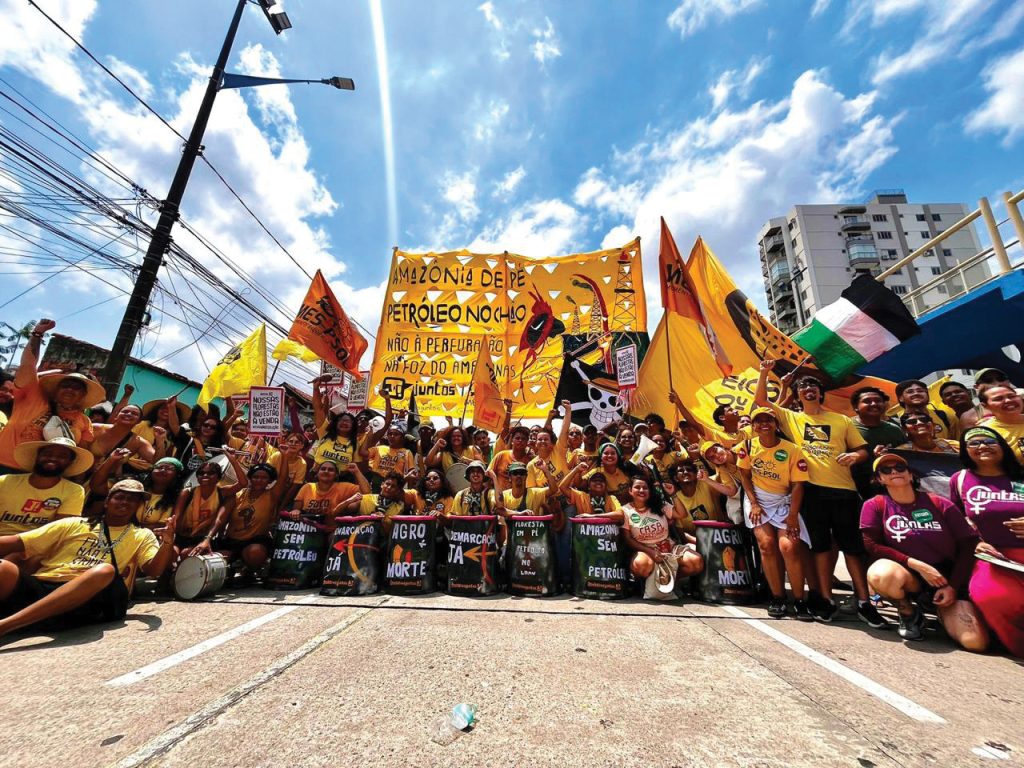
Juntos! delegation at the Global March against the climate crisis. Courtesy of Juntos!
At YDSA’s 2025 convention, Bread & Roses’ (a Marxist caucus in DSA) resolution that called for increased international coordination and exchange in fighting the global far right failed resoundingly. It is a continuous area of debate in our organization that allegations of chauvinism or nationalist sentiments have clouded.
My recent participation in the Cúpula dos Povos in Belém, Brazil, this past November, reinforced the need to create a stronger, class-struggle-focused, internationalist strategy in Y/DSA. Chapters across the country have gotten a taste of what this looks like by taking on anti-ICE campaigns. Still, the moment calls for us to clarify the political implications of this struggle beyond our borders.
Every year, the United Nations hosts an international climate conference, also known as the COP, for state leaders to discuss solutions to the worsening climate crisis. However, every year, this event has failed to produce real solutions that everyday people feel. One of the most famous “solutions” is the Paris Climate Agreement from COP21, which was an agreement to gradually reduce greenhouse gas emissions until we reach a net-zero of emissions. However, it has failed to produce any meaningful results, as it did not limit global warming, participating countries have not reduced their emissions and one of the world’s largest per capita polluters, the United States, has withdrawn from the agreement.
The ecological struggle is an internationalist struggle because climate change isn’t something that happens in one country; it is a global crisis. Parallel to COP30, social and labor movements hosted the Cúpula dos Povos — the People’s Summit — to discuss topics such as environmental racism, a just transition, confronting false solutions such as the Tropical Forest Forever Fund, internationalism, feminism and more. Discussions at the Cúpula also focused on Brazilian President Lula’s extractivist policies and on how the rise of the global far right poses a greater threat to our environment.
I was invited to participate in the Cúpula with Juntos!, an ecosocialist youth organization associated with Movimento Esquerda Socialista of the Partido Socialismo e Liberdade (MES-PSOL). Beyond diplomacy, I became a part of the international struggle by engaging with young people from around the world to create our own youth declaration against the climate crisis and participating in Juntos’ several interventions throughout the COP.
This does not mean I simply took diplomatic pictures or made pretty statements in solidarity; I actively participated in several protests, connected with youth from other countries about our shared struggle and contributed to discussions throughout the week that ultimately affected the Cúpula’s final declaration, naming capitalism as the root of the climate crisis.
Through this process, I learned critical lessons on how socialists can make effective interventions in mass movements and present a political alternative, away from the meager concessions capitalism puts on the table. These interventions should be part of a party-building project. When making interventions, Juntos! would ensure they were all wearing a Juntos! or MES-PSOL shirt, that they were all meaningfully participating in discussions, and that each would bring a unique point toward the same ecosocialist perspective.
All of these interventions were organized and practiced to maximize their effectiveness in advancing their ecosocialist vision. Not only were many attendees convinced by their points, but they also grew in militancy by clearly identifying as ecosocialist members of Juntos!. The exchange of lessons also went both ways. As MES-PSOL continues to build its electoral project, it is taking notes from the Zohran Mamdani campaign’s mass canvassing operation and experimenting with organizational vehicles to sustain the power built during an election campaign. More specifically, they are interested in experimenting with structures similar Our Time NYC.
Revisiting R10: Building an International Student Movement
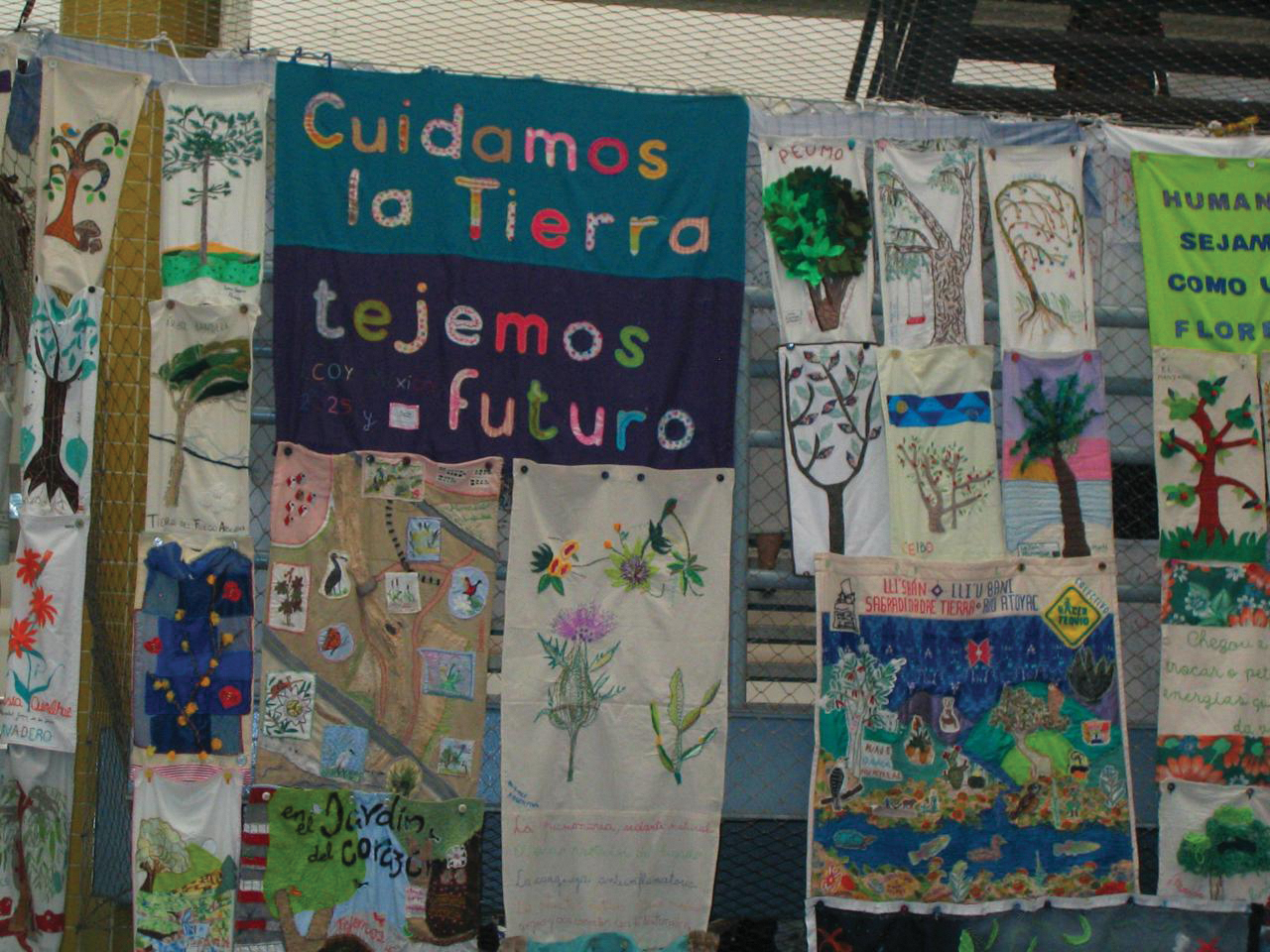
A scenes from Hernandez’ trip to Brazil. James Hernandez
Often, our internationalist work is treated as an afterthought. At the last convention, R10 to build an international student movement was rejected in favor of focusing on the crises created by ICE within our borders, and the resolution also rejected campism.
These arguments fall flat on two significant fronts.
The first argument implies that the struggles we face against ICE are primarily a domestic issue and that we have nothing of value to learn from collaborating with socialists from around the world. However, our fight against ICE must be internationalist and anti-imperialist if we hope for it to be effective.
U.S.-backed destabilization of other nations is one of the biggest reasons people immigrate to this country. To maintain the U.S.’s capital dominance over the world, the state must internationalize its productive and extractive forces to the Global South. It is this process in which we exploit the natural resources and cheap labor of other countries, often through violent enforcement.
One such example of this process is Trump’s recent aggression toward Venezuela. In 2007, Venezuela nationalized its oil fields under the presidency of Hugo Chavez. However, recently, the U.S. has killed over 100 people in the Pacific Ocean, whom the U.S. baselessly claims are involved in drug trafficking, and in January, the US kidnapped and arrested Venezuelan President Maduro on narco-terrorist charges. In a recent video, Trump made it clear that these attacks are not about drugs — it’s about stealing oil from Venezuela and regime change.
This accumulation of capital and resources by the U.S. creates a profit vacuum that goes to us, grows our labor force and boosts our economy, leaving the countries we extract from behind. These struggles ultimately force people of the Global South to move to the heart of imperialism, seeking better working conditions, higher pay and opportunities for their families.
Campism holds that the world is divided primarily by geopolitical rivalries (or camps), where class becomes secondary. The term originated during the Cold War, when the U.S. and the Soviet Union maintained the two camps; however, history has complicated these divides over time. Nowadays, the central polarization is understood to be between the U.S. and China; it differs in that the character of the latter state is far different from that of the Soviet Union.
Often, third campism, or class struggle internationalism, is framed as chauvinist, something that would detract from our internationalist work, through haughty, meaningless statements that deprioritize our relationships to larger, more complicated movements. The fundamental flaw with campism is that it places central importance on defeating the empire separately from capital. Imperial expansion exists for capital accumulation in the core, which is enforced locally by state oppressors or homegrown capitalists.
The processes of industrialization and global revolutions have not weakened imperialism, though they presented roadblocks to continued and unmitigated expansion. Instead, this process has empowered local capitalists and redistributed wealth in their favor, enabling imperialist forces to control the colonized countries through soft power as part of their integration into global markets.
Therefore, Ernest Mandel concludes in his paper, The Driving Forces of Imperialism:

“By its whole logic, the emancipatory struggle of these peoples teaches them again and again not to stop at the stage of political independence, but to continue their revolution till it has eliminated all forms of capitalist exploitation, whether foreign or native. In this way, the colonial revolution, together with the anti-capitalist struggles of the workers in the metropolis, will be able to destroy imperialism at its very roots.”
—Ernest Mandel, The Driving Forces of Imperialism
Banyan roots intertwine, creating texture. Gabi Soutto Mayor/Pexels
The emancipation of the working class will only come from the wholesale defeat of capital; there is no liberatory movement that seeks to collapse the empire without defeating capitalism.
It is the politics of class struggle internationalism that led me to the Cúpula dos Povos and guides my ongoing internationalist work on the NCC. This is because it enables me to approach organizers from other countries as equals, recognizing that we both have valuable information and politics to share and to be honest about our respective organizational and political flaws. Rather than pledging loyalty to a state or party, regardless of its named political affiliations, we must stand in solidarity with our comrades as they engage in meaningful critique of the left movement internationally, while actively fighting against U.S. intervention.
In the week where I participated in the Cúpula dos Povos, there was a central tension between a reformist vision that seeks to negotiate climate response with capital and a revolutionary vision willing to confront capital head-on. The latter group set the tone by occupying the COP30 on the first day, led by Juntos! (an ecosocialist youth organization associated with MES-PSOL) and the Indigenous Peoples of the lower Tapajós. They demanded that the Lula government end drilling in the Amazon and sought to call attention to the hypocrisy of the COP30, which peddled false solutions based on Green Capitalism, such as the Tropical Forest Forever Fund (TFFF), which would monetize “ecosystem services.”
To walk away from the summit with such an analysis, I had to approach my participation with an openness to discussing the contradictions of the Cúpula and the Lula government with my comrades. At no point did this understanding prevent us from engaging with participants who were more reformist or sympathetic to the Lula government; instead, it created a vibrant ecosystem of dialogue and exchange that enabled interventions in the proceedings of the Cúpula.
The processes of international exchange and working-class solidarity will be critical in the coming years. We are facing the far-right around the world, and at home, we are battling Trump. We have long passed the time to be blindly tailing any organization or government, and must instead keep our vision focused on winning socialism. We do this by creating a culture of exchange with socialists from around the world, participating in international discussions, sharing lessons, building camaraderie and coordinating struggles, especially as we work towards the May Day 2028 general strike. It is now our job to make an internationalist Y/DSA.
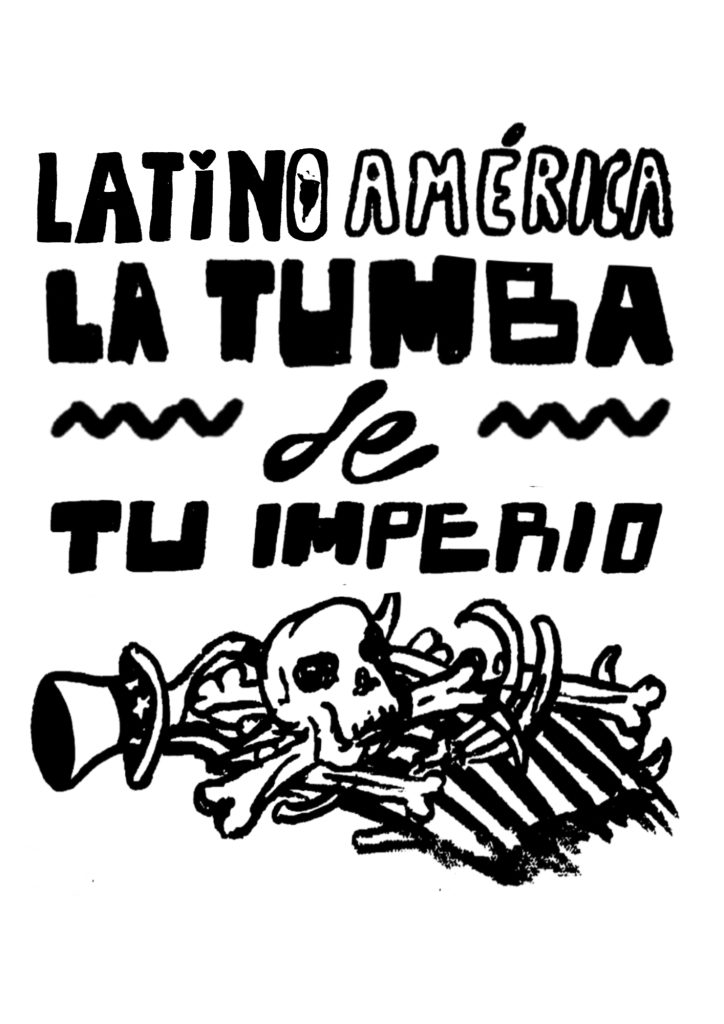
Latin America — the tomb of your empire. Mushh/JustSeeds